
Resources
Resources for your journey inward.
Guided meditations, talks and reflections to support your practice of Raja Yoga — and help you find a place to learn and connect.
From Our Blog
Insights and reflections on inner peace, spiritual values and living with purpose — from the Brahma Kumaris blog.
Showing all articles
No articles in this category yet.
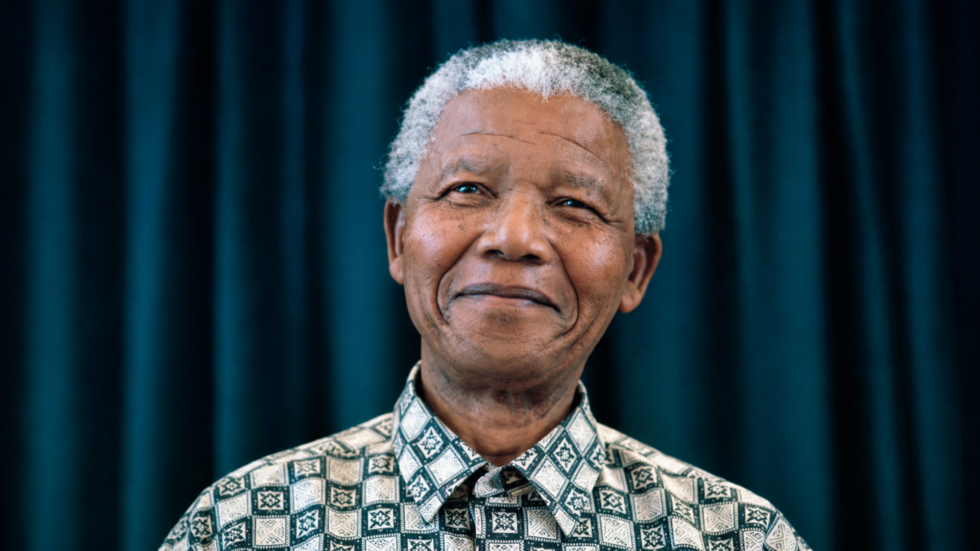
Each year, Nelson Mandela International Day invites us to reflect on the legacy of one of humanity’s greatest moral leaders. More than a celebration of his life, it is an opportunity to ask how we are living the values Madiba embodied. In a world increasingly marked by division, conflict and uncertainty, his example remains as relevant as ever. When I think of Nelson Mandela, I am reminded of his unwavering commitment to truth, justice, human dignity, and the courage to stand firm in these principles, even in the face of immense adversity. “For to be free is not merely to cast off one’s chains, but to live in a way that respects and enhances the freedom of others.” — Nelson Mandela These words remind us that true freedom is inseparable from our shared humanity. Yet fear and insecurity often lead us to blame or reject those we perceive as different. In doing so, we diminish not only others but ourselves, eroding our own humanity and our capacity to experience genuine peace and fulfilment. If our society is to heal, we must rekindle the spiritual values that nurture kindness, compassion, and respect for life. Communities become peaceful when individuals become peaceful. Lasting change begins within. Creating space for self-reflection and meditation allows us to become aware of the quality of our thoughts, attitudes and actions. As our awareness grows, so does our ability to choose differently. When we consciously place ourselves in another person’s shoes, judgment begins to give way to compassion. It is here that conscience awakens, relationships are restored, and inner freedom begins to emerge. From a spiritual perspective, the labels we use to define ourselves—race, nationality, ethnicity, culture, or social status—are secondary identities. They may shape our experiences, but they do not define our essence. Because these identities are constantly changing, relying on them alone leaves us feelingvulnerable and insecure. Beneath these external identities lies our deepest truth: the soul. The soul is the conscious self—the thinker, the feeler, the creator of thoughts and memories, and the seat of conscience. As spiritual beings, we possess an inner nature of peace, love and wisdom. Reconnecting with this awareness provides a profound sense of stability and belonging that no external circumstance can take away. When we recognise ourselves as souls, we naturally begin to see others in the same light. Our relationships become more than social interactions; they become exchanges of spiritual energy. The law of karma reminds us that whatever we give—whether kindness, respect, anger or resentment—eventually returns to us. Seeing ourselves and others through the lens of the soul affirms our shared humanity. It is this understanding that gives deeper meaning to the greeting Namaste —”I honour the divine within you.” When we live with this level of respect for one another, our conscience is truly free. This is perhaps the greatest freedom of all. Living against our conscience creates inner conflict that often manifests as stress, intolerance and violence. The suffering we witness in society is a reminder that our deepest need is not simply social or political change, but inner transformation. Peace cannot be built upon another person’s pain. Aggression ultimately breeds fear, even in the heart of the aggressor. True peace arises when we recognise that our well-being is inseparable from the well-being of others. As we commemorate Nelson Mandela International Day, may we honour Madiba not only through acts of service but through the way we think, speak and live each day. Let us embrace the spirit of Namaste —recognising the sacred dignity within ourselves and within every person we meet. In doing so, we continue the legacy of a man who showed the world that the greatest freedom begins within. Author: Pratiba Daya
Read more
A simple meditation to return to Inner Peace – extracted from The Man who loved Angels by Anthony Strano A second is a unit of time, just as thought is the basic unit of consciousness. A body has many cells, and so do time and consciousness. Whether we measure time in terms of eternity, ages, cycles centuries millennia, years, seasons, months, days, hours or minutes- the basic unit, or cell, remains the second. We may measure consciousness in terms of awareness, attitude, feelings, behaviour, choices, aliveness, responses but the basic unit, or cell, is always a thought. If these two basic units of time and consciousness are weak, then the whole of time and consciousness suffers. Just as cancer begins in a single cell and spreads to other cells, so the same happens in human life as the infected seconds and thoughts spread. Ultimately this results in emotional, mental and even physical disease in the human body and mind, since our conscious life is acted and expressed within and through time. … How can we begin to heal ourselves? If we take one second, the tiniest unit of time, and one thought, the tiniest unit of consciousness we can make them work together. Take one second to think one thought Slowly and faithfully think:”I am”. Add another second and another thought: “a soul”. Add another second or two and think: “I am peace” Add another second or two and think: ”I am a being of peace”. Repeat: “I am a soul I am peace I am a being of peace.” Repeat these thoughts gently to yourself, paying special attention to them. There is no need to rush, no need for second thoughts or ideas going anywhere else. Just focus on these thoughts about the original self. Throughout the day, gently but deeply repeat this one second one thought meditative exercise.
Read more
When any area of the cellular energy of our body is invaded by an ‘energy form’ that is of an unfriendly or incompatible nature, the ‘helper cells’ of the immune system almost immediately detect the presence of the invader. They move quickly to the relevant location to protect the affected parts of our body. While we may experience the pain of occasional disease in our body, we all suffer from the many moments of dis-ease within our consciousness, within our being. Moments of dis-ease are signals that tell us that our wellbeing is being compromised. Just as the purpose of the body’s immune system is to protect the body from disease, the immune system of the soul works in a similar way on the many kinds of ‘dis-ease’ that can occur within our consciousness. While the body is visible and tangible, consciousness is intangible. Spirit/soul is the being that I am/you are. While the immune system of the body is made up of ‘helper cells’, the immune system of the soul is not separate from the soul. The immune system of the soul is within you, the soul. It cannot be separated from you! When the immune system of the soul springs to life, the three movements within your consciousness are: awareness, realization and transformation.When you become aware of the dis-ease, you look into it and realize the ‘causal belief’. When you look deeper and realize the truth behind the belief, using the power of that truth gives you capacity to transform your state of being. As the old saying goes ‘the truth will set you free’. extracted from Immune System of the Soul by Mike George
Read more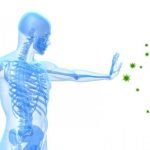
The health of our body is no longer just an occasional conversation for a few. It is now an obsessional pre-occupation for many. But the real question today is not how healthy can your body be, but are YOU a well being? Health and well-being, obviously connected, are two different things. Good health refers to the form, the body but ‘well being’ refers to … your being. You could have a healthy body but not be well in your being. Over time however, the unwellness of your being will likely translate into deteriorating health of the form that you occupy! You could be a well being while your body could be a catalogue of different ailments. Yet we now know that if you maintain your wellbeing it will more than likely have a good effect on your body’s health and even empower the healing of many of those ailments. In the age of medical expert, its easy to detect, define and describe both a state of “good health” and the various conditions of “ill health”. As our body is both visible and tangible it’s easy to work out the what, why and how things go wrong. But it’s obviously not so easy to see and understand why we are not well in our being, simply because you can’t get being into a test tube. Gradually an increasing number of people have grown both wiser and more intuitively aware of the direct link between the wellness of their being and the health of their body. While we can all benefit from such wisdom, there is still no substitute for turning our attention in wards and seeing for our self. Being able to see and identify the causes of any loss of wellbeing and know the ways to restore our being to wellness, are the primary abilities of someone who is able to be well at will, stay well wherever they are, and go well through the challenges and tests that life presents us all each and every day. extracted from Immune System of the Soul by Mike George
Read more
The world celebrates what women achieve. Spirituality reminds us to celebrate who women are becoming. There is something extraordinary about light. A single candle makes no sound. It does not seek recognition or compete with the candles around it. Yet the moment it is lit, darkness quietly begins to retreat. Perhaps that is why some of the most remarkable women are like candles. Not because they are perfect. Not because life has always been easy. But because, wherever they go, they bring a little more light. Women’s Month offers us an opportunity to celebrate remarkable women. We honour their achievements, their courage, and the many ways they have shaped our world. Yet perhaps this month also invites us to pause and ask a quieter, more personal question: Who am I becoming? Some women change the world from a stage. Others change it around a dinner table. Some lead nations; others quietly lead their families. Some inspire thousands; others transform one life at a time. Every one of these contributions matters. We live in a world that celebrates achievement—degrees, promotions, awards and success. These milestones deserve recognition because they reflect dedication, perseverance and hard work. Yet they tell only part of our story. Long after people forget what we accomplished, they remember who we were. Were we patient? Did we bring peace into the lives of others? Did we live with integrity? Did we show compassion? Did we have the courage to stand up for what was right? These are qualities that no mirror can reflect, no photograph can capture and no trophy can measure. Deep within each of us lie qualities such as peace, love, compassion and wisdom. They are part of our original nature. Life does not give us these qualities; it gives us opportunities to express them. When we reconnect with them, we do not become someone new—we simply allow our authentic selves to shine. This is where the true beauty of a woman begins. Not in the latest fashion. Not in flawless appearance. Not in the number of people who admire her. True beauty is revealed in the character she cultivates and the values she lives each day. The world often encourages us to look outward—to compare, compete and constantly prove ourselves. We spend so much time asking, Am I enough? that we rarely stop to ask a far more meaningful question: Am I living from the best within me? The greatest journey is not across countries or continents. It is the journey within. When we create moments of stillness, we begin to hear a quieter voice beneath the noise of everyday life. It reminds us that our worth has never depended on applause, perfection or the opinions of others. It reminds us that peace is not something we have to chase; it is something we can choose. Love becomes more than an emotion—it becomes the way we live. Strength is no longer measured by carrying every burden alone, but by remaining true to our values even when life becomes difficult. Perhaps this is the quiet power women have always carried: the power to create harmony where there is conflict; to offer hope where there is discouragement; to remain calm when everything around them feels uncertain; to respond with dignity when anger seems easier; and to inspire without needing applause. Like a candle, they simply shine. And the beautiful thing about light is this: it loses nothing by lighting another candle. When a woman encourages another woman instead of comparing herself to her, her own light does not diminish. When she offers kindness instead of criticism, understanding instead of judgement, generosity instead of competition, her light grows brighter. Imagine how different our homes would feel if we carried a little more patience into them. How different our communities would become if kindness mattered more than criticism. How different our world would be if we measured success not only by what we achieve, but by the peace we create and the hope we leave behind. Real change rarely begins with grand gestures. It begins quietly—with one thought, one choice and one act of kindness. This Women’s Month, let us celebrate not only the remarkable women whose names appear in history books, but also the countless women whose quiet strength has shaped families, friendships and communities without ever seeking recognition. And while we honour the women around us, let us not forget to honour ourselves. Take a moment to recognise the light you already carry. Protect it. Nurture it. Share it generously. Because the brightest light is not the one that seeks attention. It is the one that quietly helps others find their way. This August, may we celebrate not only what women achieve, but who they choose to become. For when a woman lives with peace in her heart, kindness in her words and courage in her actions, she leaves behind something far more lasting than success. She leaves behind light. And there is no greater beauty than a light that helps others discover their own.
Read more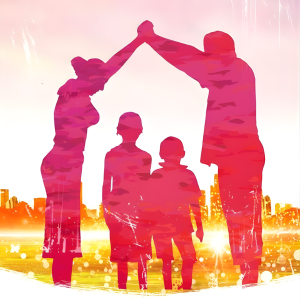
Family, the word itself creates a feeling of warmth, love, safety & acceptance. From the moment a child is born into a family, it is like an unwritten agreement of unconditional belonging between the baby & the family. Over decades of rapid change in lifestyles the family structure has undergone changes which challenges us to sustain strong family bonds in a modernised world. The basis of any healthy relationship is TRUST. When there is a lack of trust it adds to self-doubt, unmet expectations and second guessing each other. Trust allows for an atmosphere of safety which is a healthy environment for honest, authentic conversations. Trust removes the element of feeling judged and its in such an atmosphere that there is a feeling of mutual respect and growth. Such a level of security implies that instead of looking for a listener outside the safety net of the home, one will naturally be drawn towards the inner circle of family and reach out for help. Very often as a family we tend to live past each other – each one absorbed in their own priorities and schedules. Each one rushing and there not being enough time. Often the misunderstanding is that we need a lot of time. However its quality not quantity, its about being fully present and listening. Like the fingers of the same hand being different, hence each one has a particular strength and weakness. As a family each member is different and unique. Family is about these individual personalities finding common ground in the values they share. What enables there to be harmony in spite of the variety and the difference is the vision each one holds for the other. Conflict usually occurs when we trying to create a single mould into which each one needs to fit in. But when there is acceptance of the uniqueness of the other we can use the difference as a strength. This brings harmony. At a spiritual level it relates to seeing the other as a soul, a spiritual being who has been gifted with qualities from the Divine. This vision instils a deep and profound respect. Our social conditioning plays a huge role whereby each one assumes roles based on cultural influences. Todays society in many ways challenges these traditional roles, because our current time requires both genders to contribute to both earning financially but also household chores. Unless we adapt to these changing roles with a keen sense of appreciation of each ones contribution there can be conflict. Conflict usually occurs because of power based on the ego and the need for control. It comes back to trust, where there is trust there is no need for ego. Differences need to be communicated but with understanding and love. Often there is a dance we need to learn between humility and self-respect to navigate this. Finally the invasion of social-media and with the advent of AI, family bonds seem unimportant and something which can be avoided in comparison to the thousands of virtual friendships and array of followers lined up which makes up for all the needs of companionship. The age-old saying that man is a social animal has slowly but rapidly transformed into man is a virtual prisoner. We crave connection, because connection is what makes us feel valued. Virtual connections give a temporary high – however it is often just fake. Real connections occur when we are together. It is a very widely spoken about fact that a family that eats together and prays together stays strong together. When a family sits together for meals, firstly each one is giving a slice of their time into the joint project called “family” and as we all know that money may come and go but time once gone can never come back. Meal times are an opportunity to share the dramas of each ones day – allowing for a shared feeling of belonging. Similarly, when we pray together, we are combining our individual energies and linking with the Supreme energy whom we refer to as God or Almighty. Such combined remembrance of God fills each one with Love, Joy, Peace, Wisdom and Purity and these positive virtues ignited in each one will fill the home with a nurturing energy which will sustain harmony and peace. The golden rule for creating and sustaining harmony among family members respect and love without any judgement or pre-conceived notions. Spend quality time with each other enriching each one. Harmony stems from a deep, unconditional affection. This love is the first type of love a person experiences and is essential for emotional well-being, providing a foundation of security and support.
Read more
In our journey we have come to believe that we are only capable of loving others when we first learn to love the self. What does self love actually mean? Does it mean that I keep convincing myself of my goodness based on what I perceive to be my strengths and specialities? The starting point for love is complete acceptance. As long as we put conditions to love – it stops being love and becomes the currency of acceptance, value or happiness. To break away from this belief of love – it is to realise that I don’t love because of … I love. True love doesnt need to be validated but it simply loves. When we come from this premise, then our perception of self love begins to transform. Instead of feeling the need to love the self – I begin to be love. Love is not an emotion – love is the giving of the self. It is the highest expression or the purest energy of the self. Love is a name for the pure awareness and radiant light of consciousness, which is „the self‟, but only when we are free of all attachment, free of all attempts to possess, hold on, own, acquire or desire anything or anyone. Love is what you/we are. It is what the „I‟ that says „I am‟ is! To say, „“I love my self ”, only sustains an illusion that there is an „I‟ and a „self ‟, when, in truth, there is only the „I‟ that says „I am‟. The „I‟ is the „self‟ and the self is love. Just as the eye cannot see itself and the finger cannot touch itself, so you cannot love your self. Love cannot love love! Neither the self nor love is an object. Love just „is‟ because you just „are‟ and because I just am! This level of „self-realisation‟ completely alters our perceptions and perspectives of love. It transforms the meaning of love from something superficial, as depicted by Hollywood in particular and marketing in general, into something that is not a thing! It transforms our definitions of love from something that needs to be acquired, into an awareness of „the self‟ as a source of love in the world. It frees us from the „great search‟ for love and we come to know our self (and the other) as someone who is already and always present „as love‟. It may be hidden behind too much thinking, it may be temporarily suppressed by too many memories, it may be distorted by our attachments into more familiar feelings of fear (of loss). But love is never lost, for we can never lose our self. And we all intuitively know the answer to the question, „how do I know love?‟ At what might be called the „spiritual level‟, the level of our consciousness, only when we give what we have do we know what we have. Only when we give what we are do we know what we are. Which is why, when you give that gift „with love‟, you are the first to know and feel that love „on the way out‟. Only when you give what you are do you know that what you have is the same as what you are. And when you give what you are that‟s when you realize your self as love.
Read more
There are times in our outer and inner worlds when we experience tumultuous change and uncertainty. These moments seem to be escalating in frequency and intensity. Managing and responding calmly to challenging times —in our relationships, workplaces, the environment, globally and even in our own state of mind—is a vital skill for everyday living. For 50 years Sr Meera has been a practitioner of Raja Yoga meditation with the Brahma Kumaris. Born in India, however since the mid seventies she has lived and served in many countries. Sr. Meera is the director of the Brahma Kumaris in Malaysia. As an international speaker, she focuses on topics pertaining to the quality of life, specifically researching the subject of the mind and developing techniques to deepen the experience of inner peace and silence. Bookings: info@brahmakumaris.org.za
Read more
How do you stay calm, sane and focused when everything around you is in a state of flux? Here are 7 tips to help you keep a cool head. Breathe– Yes breathe. The act of breathing slowly and deeply helps to relax your body, but also slows down your thinking. Thinking fewer thoughts gives your mind the space it needs to find clarity and calm. Traffic control – That is, traffic control of your mind. Get into the habit of taking mental breaks for a minute or so, to notice the world around you. This will make you aware of and help you put a stop to the stream of thoughts in your head. It helps to focus on a mental image you associate with peace and calm, or to play some music that soothes you when you take these breaks. The best practice, however, is simply to look around and observe life around you – without thinking! This practice, if used frequently and consciously, will help you develop an ability to stay present and centered. Self-reflect– Make time to reflect on the experiences of your day. What insights can you draw, what can you appreciate, and where could you realign your behavior with your values? Self-reflection allows time to process what has happened and to consider where you could improve as a person. The process of self-reflection will help you to stay focused on what matters most. Focus– In chaotic situations, other people’s urgencies and agendas can hijack us. We take on those urgencies as our own, and so our own sense of peace becomes disturbed. It is important to remember your own priorities, beliefs and values. Consider other people’s perspective, understand their fears, and be sympathetic to their situation, but never at the expense of your own sanity. Stay centered– A tendency most of us share is to feel responsible for fixing any chaotic situation we find ourselves in, by becoming a part of it. But chaos can never be fixed if you’re a part of it. Chaos can only be fixed if you remain centered and calm, and hold onto your inner peace, which will allow you to reorder the energy of chaos into energy of balance. If you are internally balanced, you will be able to see things from a bird’s eye view and, when solutions present themselves, you will be able to act on them. The alternative is to become emotionally tangled in the situation, in which case finding solutions will be difficult and acting on them nearly impossible. Be flexible– The rigid oak crashes in the storm, but the flexible bamboo survives. Don’t be too fixated on your ideas or preferences. Be flexible. This will allow you to invite newness into the situation, which can lead to something better than what you had planned. So be open to diversity and new perspectives – don’t lose your principles, but understand that there are many ways to be in the world. Hold onto your sense of humor– Laughter really is the best medicine. Don’t take things too seriously and try, always, to look on the light side of things. Do not view your responsibilities as a burden, but rather as an opportunity to serve with love. Learn to look at life with the innocence of a child and respond with the wisdom of a master. Call it an art or call it a challenge – but ultimately, it is about experiencing the best of what the moment has to offer, and letting go of the worst.
Read more
Violence begins in the mind and in the wounded heart. It is an expression of our innermost negative thoughts and emotions which emerge as a result of imprinted or engraved feelings of injustice, superiority, inadequacy, aloneness and/or unfulfilled desires. An act of violence can erupt in a second as a reaction to a person or a situation, or after long periods of suppression. The expression of violence can also be easily ignited when in the company of others who are enraged and expressing acts of violence. Violence is expressed through thoughts, words, or actions that are meant to intimidate, cause harm, or to gain power over and control people and situations. This state of being violent is caused by a shift in consciousness. Originally we were egoless, viceless, and aware of ourselves as spiritual beings. Then, over time, the consciousness shifted into body consciousness from soul consciousness, and the qualities of greed, anger, revenge, ego, lust and attachment became prevalent. When this occurs there is a certain dis – ease within that causes frustration, agitation, and discontent. A feeling of incongruence develops within from the duality of what we were when we lived in a state of soul consciousness, and what we become in a state of body consciousness. The more body conscious one becomes, the higher the probability of aggressive attitudes and behaviors (violence) increases. In summary, violence from a spiritual perspective is an illness of the soul who has lost its original power of peace. In peace there is love and respect for the self and for others. When the light of peace is ignited within, the darkness of anger and violence is dispelled. Violence is the absence of the light of peace and love in life.
Read more
As we celebrate womens month, its valuable to reflect on womens role in leadership – and in particular what are the spiritual qualities that women can naturally offer when they centered in their true essence. Women become spiritual leaders when they themselves acknowledge they have the capacity and necessary attributes to play such a role. The change of consciousness needed is to move away from unworthy feelings and attitudes and to see the greatness contained within the self. Feminine qualities such as love, tolerance, compassion, understanding and humility are qualities of leadership. They are also needed for spiritual progress, for without them it would be impossible to come close to God and attain self-realisation. Every human being possesses those qualities but women are more easily and naturally able to tap them, for feelings of love and devotion are often more natural to women, combined with a profound sense of discipline and order. A true leader leads through example. Women know how to serve and how to give. Often the notion of service or of putting others in front has been seen as a sign of weakness or lack of power. Quite the opposite is true. The ability to bow before others, with true humility, is the sign of the greatness of a soul who has conquered ego. However this quality of giving to others must also be balanced with qualities of courage, determination, clear thinking and self-respect. Too often, women have a tendency to give to others and neglect their own spiritual needs. It is one of the major reasons women find themselves depleted and lacking in spiritual power. The foundation for assuming spiritual leadership is thus a change of consciousness. Overcoming the huge physical, religious and sociological barriers which have prevented women becoming spiritual leaders can only be done through the development of self-respect. The quality of self-respect comes from the knowledge and experience of the eternal self which is beyond social, cultural or physical identity. The eternal self or soul is pure, peaceful and complete with divine and spiritual qualities. When women touch this inner, eternal core, they gain the courage to play the part they are capable of. Spiritual power is an expression of the inherent qualities of the spirit and has nothing to do with gender or physical limitations. Feelings of domination or suppression occur when there is the awareness of superiority or inferiority. Feelings of equality, however, manifest when there is the consciousness of spirit or soul. These feelings and attitudes can be expressed in actions with positive results. Women are still a long way from enjoying positions of spiritual leadership, and society still doesn’t fully concur with the notion that women make good spiritual leaders. Yet, society won’t necessarily change until someone, whether an individual or a group of individuals, breaks the tradition and sets a new role model. This, in part, was the thinking behind the work of Brahma Baba, founder of the Brahma Kumaris World Spiritual University. Extracted from an article by Sr Sudesh, Director of Brahma Kumaris in Germany
Read more
“Never doubt that a small group of thoughtful, committed citizens can change the world; indeed, it’s the only thing that ever has.” Margaret Mead
Read more
Shifting Consciousness to support a value-based leadership in all spheres of society which will lead communities towards the creation of peaceful and more egalitarian societies
Read more
Modern life rarely slows down. Between early-morning commutes, demanding careers, endless notifications, family responsibilities and the pressure to achieve, many of us live at a relentless pace. We work hard to build meaningful lives, yet somewhere between deadlines and daily demands, we often lose touch with the very thing we are working so hard to protect—our inner peace.
Read more
The word Yoga is derived from the Sanskrit root ‘Yuj’ meaning to join or to yoke or to unite. As per yogic scriptures the practice of Yoga leads to the union of individual consciousness with that of Universal Consciousness, indicating a perfect harmony between the mind and body, between man and nature.
Read more